

By Hanna Oltmanns - Feburary 6 , 2026
It’s facts like these that make people stop and rethink their sunscreen choices. But with so many options out there, and confusing claims on every bottle, it’s no surprise we get this question all the time: “What’s the difference between mineral and chemical sunscreens?”
At Suntribe, we’ve spent years developing natural sunscreens that are effective, safe, and gentle on both skin and nature. In this article, we’ll walk you through the key differences, bust common myths, and explain why we choose to only make mineral sunscreens by using certified organic ingredients and the safest UV filters available.

How chemical and mineral sunscreens differ
Let’s break it down simply:
Chemical Sunscreens
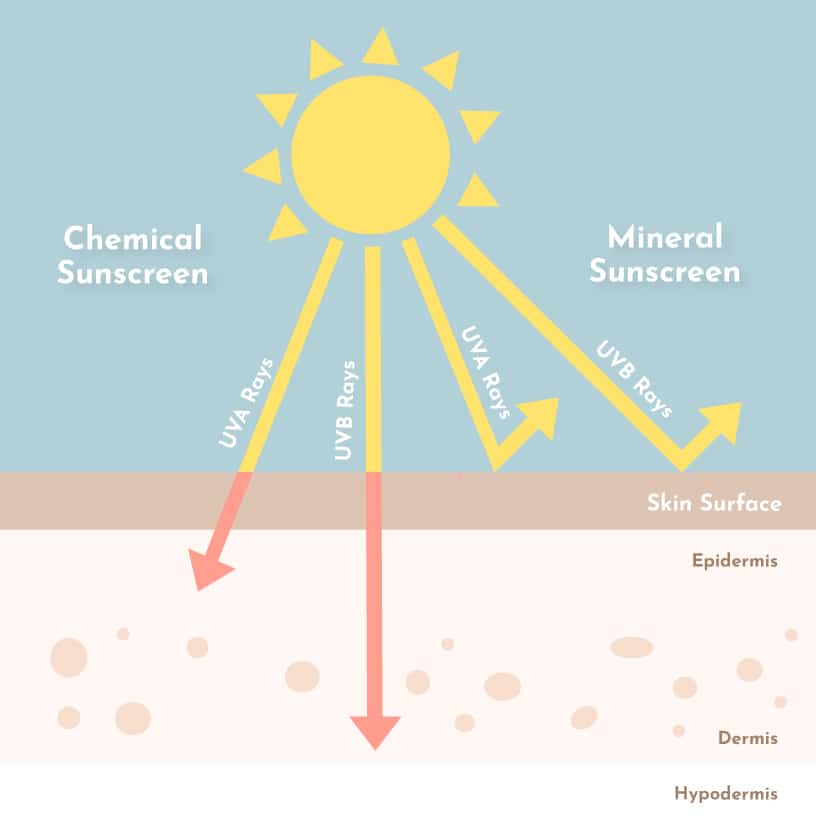
These work by absorbing into your skin, where their synthetic UV filters (such as Oxybenzone, Avobenzone, or Octinoxate) convert UV rays into heat. While this may sound high-tech, there’s a downside:
These filters are absorbed into your bloodstream
Research has linked them to hormone disruption, skin irritation, and even fertility concerns
Some chemical filters can degrade under sunlight, losing effectiveness over time
They are among the main contributors to coral reef bleaching and marine toxicity
Mineral (Physical) Sunscreens
These use natural minerals like Zinc Oxide (and sometimes Titanium Dioxide) to form a physical barrier that reflects UV rays away from your skin, like tiny mirrors.
They stay on the surface of your skin instead of being absorbed
Offer broad spectrum protection from both UVA and UVB rays
Ideal for sensitive skin, babies, and during pregnancy
Considered the safest choice for marine life when used in non-nano form
At Suntribe, we use only non-nano, non-micronized Zinc Oxide, with selected products also including a small percentage of non-nano Titanium Dioxide. These mineral UV-filters are too large to enter your bloodstream, which makes them especially safe for children, pregnant women, and people with allergic or reactive skin.
Mineral sunscreens are safer for your health
The way sunscreens work makes a big difference when it comes to how they affect your body.
Since chemical sunscreens are being absorbed into you skin where their active ingredients convert UV rays into heat, they pose a significant risk to your health. As mentioned above, they have been linked to hormone disruption, allergic reactions, and even potential impacts on fertility and fetal development.
Mineral sunscreens, by contrast, act as a physical barrier. They sit on the surface of your skin, reflecting harmful rays without ever needing to be absorbed. If used in their non-nano form, these mineral particles stay on the skin, where they belong.
But it’s not just about the UV filters. Many conventional sunscreens also contain synthetic preservatives, perfumes, and parabens that can trigger skin reactions, especially in sensitive individuals.
Most mineral sunscreens are formulated with a minimalist ingredient philosophy, relying on organic oils and butters that naturally soothe and moisturize your skin while protecting it from the sun.
To sum it up: Mineral sunscreens are considered safer for your health because they use mineral UV filters that stay on the surface of the skin and are typically made with fewer, more natural ingredients.
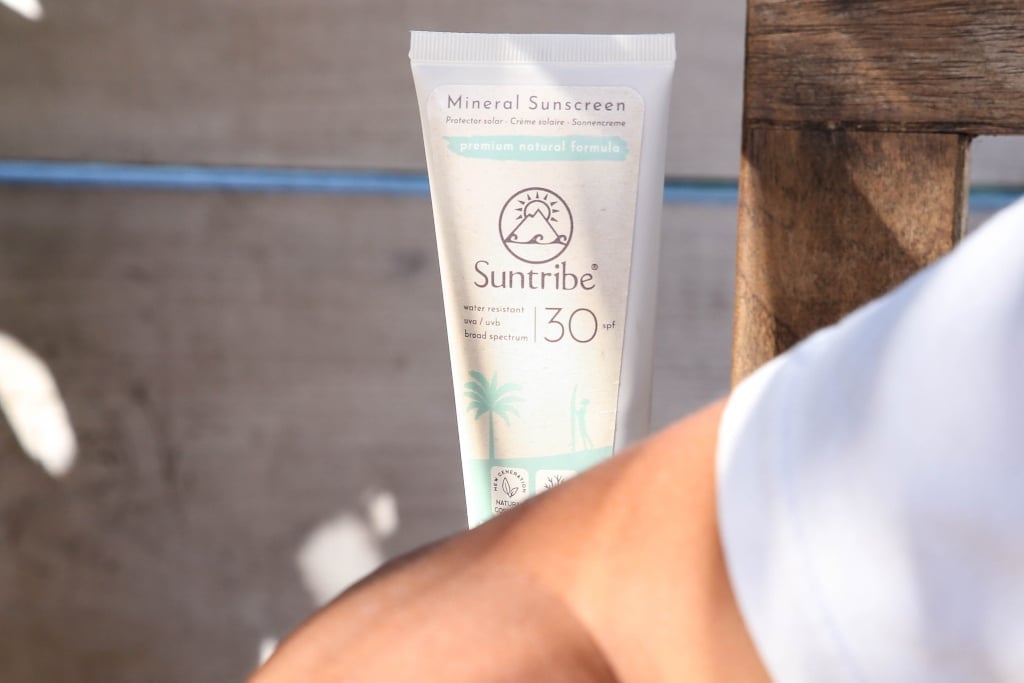
Mineral sunscreens protect you from both UVA & UVB rays
When choosing a sunscreen, most people focus on SPF, but SPF only tells you how well the product protects against UVB rays, which cause sunburn.
UVA rays are equally important. They penetrate more deeply into the skin and are a leading cause of premature aging, hyperpigmentation, and long-term skin damage, yet they leave no immediate signs like redness or pain.
That’s why you need broad-spectrum protection, which shields you from both UVA and UVB rays.
Zinc Oxide (the mineral UV filter used in all Suntribe sunscreens) is one of the very few ingredients that protects effectively against both.
Mineral sunscreens based on zinc oxide are capable of reaching critical wavelengths of around 380 nm, surpassing the threshold for broad‑spectrum classification and ensuring excellent UVA protection.
Unlike many chemical filters, Zinc Oxide is highly photostable, which means it doesn’t degrade in sunlight, ensuring consistent and long-lasting protection.
To sum it up: Mineral sunscreens can provide reliable broad‑spectrum protection when they are formulated with effective mineral UV filters.
Suntribe sunscreens have been tested to a critical wavelength of 380 nm, which exceeds the threshold (370 nm) required for classification as excellent UVA protection. If you would like to know more, check out our detailed article on the topic here:
Mineral sunscreens offer instant protection
Did you know that you’re supposed to put on conventional chemical sunscreens before you go out in the sun? That’s because chemical sunscreens need 15-30 minutes to become effective after application.
Mineral sunscreen, however, start working from the moment you apply them. Because they form a physical barrier on top of the skin, you don’t have to wait before heading out in the sun or chasing your kids into the water.
Mineral sunscreens are safer for the ocean
Sun protection doesn’t stop at your skin. It also affects the environments you swim in.
Research has shown that certain chemical UV filters, especially oxybenzone, can harm coral reefs even at extremely low concentrations. Studies suggest that just one drop of oxybenzone-containing sunscreen dispersed in the volume of an Olympic-sized swimming pool can be enough to cause damage to coral larvae. These chemicals have been linked to coral bleaching, DNA damage in corals, and hormonal disruption in marine organisms such as fish.
Because of these effects, several coastal regions, including Hawaii and Palau, have introduced bans on sunscreens containing specific chemical UV filters.
Mineral sunscreens work differently. When formulated with non‑nano zinc oxide, they are currently considered the least harmful UV-filter option for marine environments according to the available scientific research. Non‑nano zinc oxide particles are larger, less reactive, and—when used in approved concentrations—have not been shown to cause the same reef‑damaging effects as many chemical filters.
To reduce environmental impact even further, well-formulated mineral sunscreens are often highly water‑resistant, meaning more of the sunscreen stays on your skin instead of washing off into the ocean.
To sum it up: Choosing a reef‑safe mineral sunscreen helps protect not only your skin, but also coral reefs and marine life (without compromising on sun protection).

Mineral sunscreens don’t have to leave a white cast or a mess
One of the most common concerns about mineral sunscreens is the white cast, that chalky look that makes you feel like you’ve stepped out of a ghost story. And yes, earlier versions of mineral sunscreens were often thick, pasty, and hard to blend in.
But those days are (mostly) gone.
Thanks to improved formulations and natural tints, many modern mineral sunscreens are much easier to apply and far less visible on the skin. Some, like tinted sunscreens, use natural pigments such as cacao powder or iron oxides to help the product blend better with a variety of skin tones.
Of course, the level of visibility can depend on your skin tone, the texture of the product, and how much you apply, but the whitening effect is now often minimal to barely noticeable, especially when the sunscreen is applied well.
You might wonder: And what about stains on clothes?
Mineral sunscreens are often thicker and water-resistant, which means they can cling to fabric. But with the right ingredients, these marks don’t have to be permanent. If you get a bit of sunscreen on your clothing, it can usually be removed with warm water, gentle soap, and a bit of rubbing. There’s no need to toss your favorite t-shirt or swimwear.
To sum it up: Today’s mineral sunscreens don’t have to leave a white cast, and they don’t have to ruin your clothes. With the right formula, you can protect your skin without compromise.
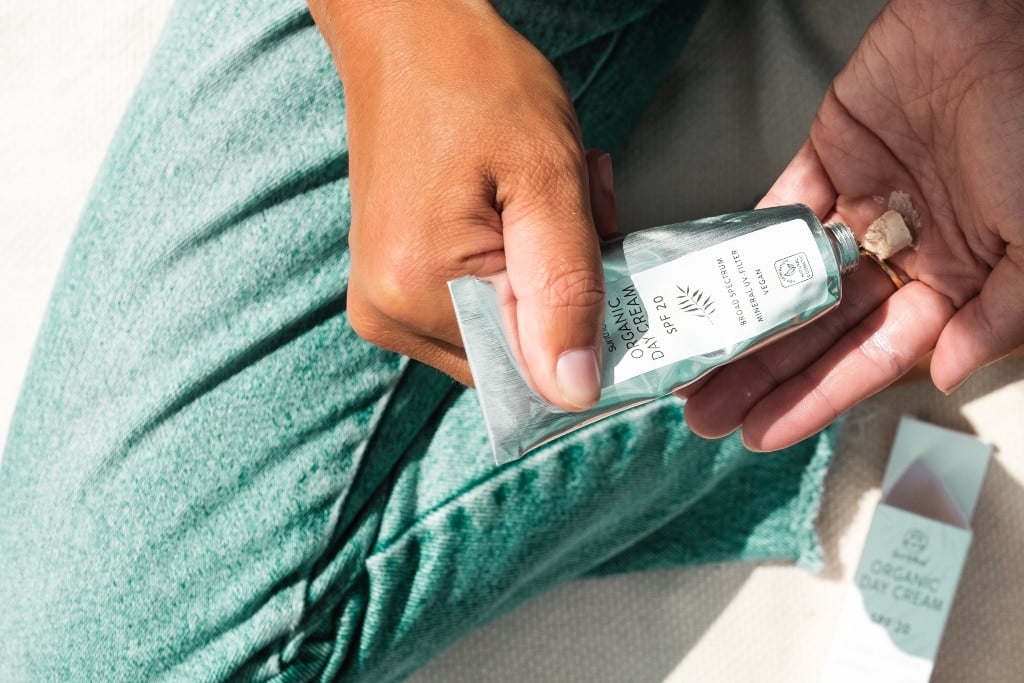
Why mineral sunscreens are worth the switch
By now, the reasons are clear: mineral sunscreens offer effective, broad-spectrum sun protection, without the potential health risks of chemical filters or the environmental damage they can cause.
They work instantly, are gentle on sensitive skin, safe for babies and during pregnancy, and when made with non-nano zinc oxide, they’re the most reef-safe option available today. Add to that the nourishing natural ingredients and improved formulas that reduce white cast and staining, and it’s easy to see why more and more people are making the switch.
To put it simply: Mineral sunscreens protect your skin, your health, and the planet all at once.